


When I was a kid, the only thing that made going to the grocery store with my mother bearable was sample day.
One day each week, the grocery store became a magical land of food fairies handing out tempting goods like turkey meatballs and Boursin on crackers.
It was like a scavenger hunt. “Did you see the cocktail weenies?”
“No, where are those? I was scarfing some dumplings over in the frozen section.”
And while you’ll still find the one-off sample here and there, it’s no longer the bite-sized smorgasbord that it was back in the good-old 1900s. (Unless you go to Costco.)
Sigh.
But that’s not to say there’s not OTHER good free stuff out there. Free stuff that hospitality brands like yours can use to transform cold web traffic into future prospects.
We’re talking about the lead magnet.
What’s a Lead Magnet?
A lead magnet is a fancy term for something not at all fancy.
It’s just a goodie that you offer prospects in your target audience—for free—in exchange for signing up for your marketing channels. I’ll mostly be talking about email marketing here, but the principle applies for text marketing as well.
Some lead magnets can also be used to build social channels, like giveaways. You know the ones that say “to enter, follow this account (and these 72 other accounts) and leave a comment!” It’s engagement-farming, but it’s also a lead magnet.
Wait…Why Build an Email List?
The lead magnet can be your ticket to email list growth. But why bother? What’s the point of even building an email list?
I’m about to tell you.
- You own your email or text list. It may live on Mailchimp or Klaviyo, but you can download it and take it with you wherever you go. Not so with Instagram, Facebook, or YouTube.
- No algorithms. I follow hundreds of accounts between my business and personal Instagrams, but The Great Algorithm only shows content from a fraction of those accounts. It’s the same across all social media. Email is algorithm-free. (You do have to contend with spam filters, but that’s a different issue.)
- Segmentation. Instead of blasting the same message to your entire Instagram account, you can experiment with more focused messages that connect with smaller segments. For example, a hotel could send location-specific email campaigns to hotel guests who stayed at a certain property one year later.
- Automations. Welcome sequences, birthday gifts, review requests, re-engagement emails. Email lets you set up marketing automations that keep in touch with your prospects while you’re at the beach (or more likely, working your way through the thousand other things on your to-do list.)
- Re-marketing. Email is the easiest, most reliable way to keep in touch with people who have bought from you in the past. And remember: it’s much cheaper to get past customers to buy again than it is to convert a new customer.
BTW: If you don’t know where to start with segmentation, automations, re-marketing…I can help you with that. Get in touch.
Now, let’s dig into some different lead magnet ideas for hospitality brands, so you can start building and booking.
1. Discounts & Coupons
In the world of ecommerce, a discount is the easiest (and often most-effective) lead magnet option.
We’ve all seen it. You visit a website to check out a product, and a pop-up springs into action, promising you 10%, 20%, 25% off your first purchase when you fork over your email address.
It’s a classic lead magnet because it really does work. One of my ecommerce clients pulls in about 2,500 new email signups per month with one of these pop-ups for their website visitors.
Now for hospitality, we have to introduce a little nuance.
Quick-service and casual restaurants can absolutely go this route, offering a discount code for dine-in or takeout. Or instead of a flat-rate discount, you could offer a little something for free that won’t screw up your margins. Think an appetizer or dessert with a low food cost.
But that doesn’t match the vibe for everyone. Fine dining restaurants and upscale hotels aren’t after coupon-clippers. They’re offering a more high-end experience.
Interestingly, my hotel folks love ✨ offers ✨. They give ’em cute little names and everything like…
- Stay and Play! (Two complimentary rounds of golf)
- Park and Ride! (Complimentary valet parking)
- Linger Longer! (20% off when you say 5+ nights)
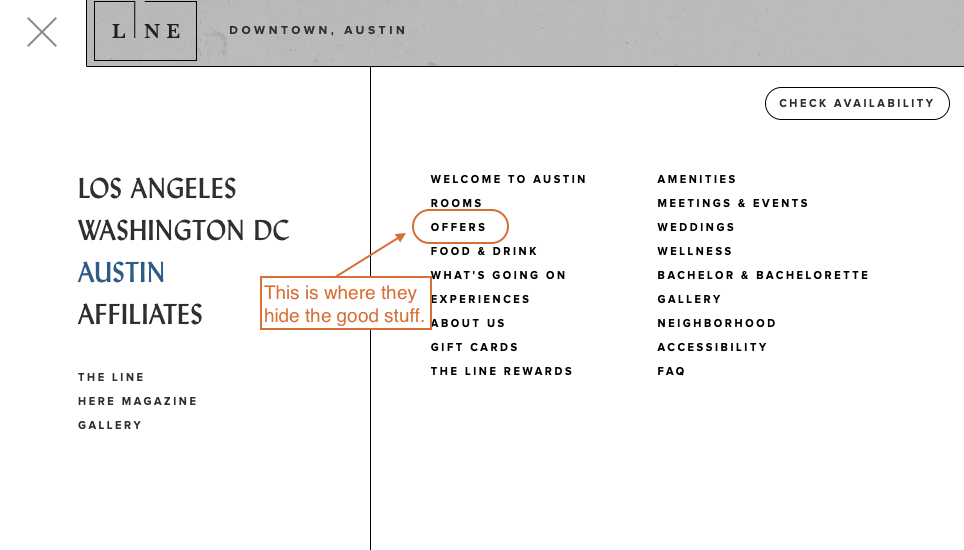
So I say, let’s merge the offer and the lead magnet. You can provide the exact same deal, but use it as an incentive to gather email addresses rather than as an incentive to book.
Good options include:
- Waived resort or facility fees (People really hate these. It’s me. I’m people.)
- Complimentary add-ons, like parking or breakfast
- Room upgrade offers when guests book direct instead of through an OTA.
The Discount Risk
No way around it—not every person who signs up for your email list stays on it.
Discount-hunters sign up, redeem the deal to save money on something they were already planning to buy, and immediately unsubscribe. Now you’ve lost profit on the sale and you’ve lost a lead for future marketing.
It’s a calculated risk. And it’s why your discount code or coupon delivery needs to be part of a strong email welcome sequence, so we can give subscribers a reason to stick around.
2. Guides & Checklists
Guides and checklists tell your prospects, “I know what your problems are, and I can help you solve them. In fact, here’s a quick, FREE solution to one of your problems right now! And all you need to do is hand over your email address to get it.”
For a long time, guides and checklists were the heavyweights of lead magnets. They’re easy to make and they build trust. And if you could find the right problem to solve, something that really resonated with your prospect, they could be major list builders.
However…
Because of AI, slapdash guides aren’t pulling in the kind of conversions that they used to. As a customer, why should I sign up to get your neighborhood guide lead magnet (which is two years old and half the places on it have closed) when I can have AI whip up something similar in 10 seconds? And it only hallucinated, like, three of the places it mentioned?
Here’s the key to guides and checklists now:
- They must be specific
- They need to include insider information
- They should be attributed to a real person with real credibility inside your organization.
A marketer or copywriter can WRITE the thing. But the INFORMATION should come from an expert on your team, and we want to market it that way.
Here’s what I’m talking about:
- Chef Aaron’s top dive bars in Hell’s Kitchen (for a hip Hell’s Kitchen hotel)
- The local’s guide to an awesome day at Disney (by your hotel concierge who’s been 200 times)
- The concierge’s honest restaurant guide (not the tourist spots…the REAL ones)
- A sommelier’s guide to wine country (by your hotel restaurant sommelier)
- An event coordinator’s checklist for a stress-free corporate retreat (from someone who has been in the trenches)
- An event planner’s personal wedding vendor recommendations (with a short personal note on why they love each one)
See what I’m getting at here? Each of these addresses a specific issue (where to get a shot and a beer in Hell’s Kitchen, where to find the best wine in Napa Valley), each has insider information from a local, and each includes the pedigree of a subject matter expert.
ChatGPT could never.

3. Video & Audio Content
What else can we offer besides discounts or written content?
Let’s ramp up the production values with some audio/visual magic.
A real human face or voice adds a personal touch, and it’s still hard for AI to replicate that convincingly (for now).
Just like the guides section above, your audio/visual format has to offer real value. A “welcome to our hotel” or 3D walk-thru of the space doesn’t earn an email address. So what does?
Maybe…
- A guided meditation or breathwork audio series from your spa team
- A full recorded cooking class with the chef
- A curated Spotify playlist that creates the vibe of your hotel’s destination (Bonus if it’s all local musicians!)
- A workout or yoga video from a resort or hotel with a strong wellness identity
- A video bringing couples behind the scenes of the wedding industry, so they’ll know what to truly expect while planning their event
Video and audio are intimidating because they require a little more technical know-how. But they don’t have to be fancy. You can record good audio with a cheap Bluetooth mic, and good video with an iPhone and a tripod.
4. Private Resource Hubs
Instead of a single download, what if you shared a collection of resources all on one password-protected page?
Now instead of offering “a PDF,” you’re offering access. This feels more valuable to the subscriber, and gives you an easy way to add new content and update the old stuff over time.
A resource hub works particularly well for wedding venues, event spaces, and event planners—brands that have a lot of resources to offer. You could even combine several formats from this list—a checklist, a vendor guide, a timeline template, some audio content—all in one place.
5. Templates
Depending on your niche, the people who are starting to look into your services might be elbow-deep in planning mode, and they need practical tools to help them get it done. Help them out with a lovely branded template.
Templates work really well for wedding, event, and group travel audiences. Think people who are organizing something complex and are afraid of missing something crucial.
Templates need to be easy-to-use and well-designed. Bringing on a graphic designer might be a good idea here, if you don’t have that kind of eye yourself. Keep it clean and in a usable format, like Google Sheets or Notion.
So what kind of templates are we talking about?
For wedding couples:
- Day-of timeline
- Vendor contact sheet
- Seating chart
- Expense tracker
- Wedding weekend itinerary
Corporate event planners:
- Run-of-show
- Offsite agenda planner
- AV and logistical checklist
Group travel organizers:
- RSVPs and room assignments
- Event/travel itineraries
- Expense and reimbursement trackers
- Flight and transfer trackers
- Group meal planner/restaurant reservation log
General travel:
- Trip budget tracker
- Packing list builders by destination (beach, mountain, city, etc)
- Travel insurance comparison worksheet
- “Trip handoff” docs for house sitters, pet sitters, babysitters
- Day-by-day travel itinerary builder with time blocks
You can even combine lots of these into a multi-tabbed spreadsheet, so your prospects can keep everything in one place (and see your brand name every time they open it up).
6. Quizzes
Quizzes require higher effort, but they can also bring big rewards for the right brand. They’re best for brands with range, like multiple destinations, styles, or offerings to match people to.
They need to feel truly personalized and offer real insights for the prospect. Otherwise they’re just gimmicky time wasters, and nobody likes that.
For example:
Travel Quiz – Great for a hotel group or vacation rental company with lots of travel destinations. Travel quizzes can dig into what people like to do when they travel, like relax on the beach, go to museums, shop local boutiques, and eat great food. And they can then offer a few destination matches based on the responses.
Honeymoon Style Quiz – Similar to the travel quiz, this could help couples answer important questions about the type of honeymoon experience they want, and match them to possible destinations.
“What kind of bride/groom are you?” Quiz – A wedding planner who offers multiple types of planning services, from full planning to month-of to day-of could offer a quiz to help couples figure out which type of service is right for them.
“What’s your design style” Quiz – How about an interior designer who helps overwhelmed homeowners figure out what kind of design style they like?
Some people shy away from the quiz because they’re afraid of the technical side.
But platforms like Typeform, Interact, Scoreapp, and Outgrow make that part pretty easy. They’re not free, but if they’re bringing you good leads, they may be worth it.
7. Giveaways and Contests
You’ve got something the people want. And they’re willing to hand over their contact info for a chance to win it.
Free hotel stays or vacation packages. Spa treatments. A complimentary consultation. Good giveaways can be huge short-burst list builders.
But just like with coupons and discounts, you need to give people a reason to stick around and stay engaged. That means a good welcome sequence and quality content that makes it worth keeping you in their inbox.

Don’t Forget…
Always consider your target audience when developing your lead magnet, instead of casting a wide net that you think will appeal to “everyone.” (Spoiler: it won’t.)
If your hotel brings in major business revenue, speak to that audience. If your restaurant is family-friendly and affordable, speak to that audience. If your glamping resort is ideal for people who like nature but hate being uncomfortable, speak to that audience. (Me again.)
The best lead magnet attracts the right person, not just anyone. For your email marketing to work (and remember, that’s the end goal here), you need to fill up your list with people who might…someday…actually buy.
Header image by Alena Kučerová from Pixabay





+ show Comments
- Hide Comments
add a comment