


Just a couple weeks ago, I headed to the Instagram account of a long-time client to check out a recent post. I was working on some web banner copy, and wanted to see what language they had used for this particular launch.
Color me surprised when the account was gone.
Well, I thought, things happen. Probably an error. I’m sure they know, but I’ll ping them just in case.
Their response?
“Yeah, it got shut down over the weekend. Our sister brand, too. We think someone is flagging us. We’re trying to get it reinstated.”
Friends, it’s been a month. The accounts are still AWOL. We’re talking something like 225,000 followers between the two.
You’ve probably heard it before, but it bears repeating: You should not build your entire online presence on a platform that you don’t own.
Use social media, by all means! But the online marketing channels that you own are your website and your email list. These are the powerhouses that will always be there for you, if you build them.
But I know…I’m not unbiased.
I write websites and email marketing campaigns for a living.
So instead of me trying to explain why a small business website is so crucial, I did some crowdsourcing to find out what The People™ had to say.
Here’s the word…from the wonderful world of Reddit.
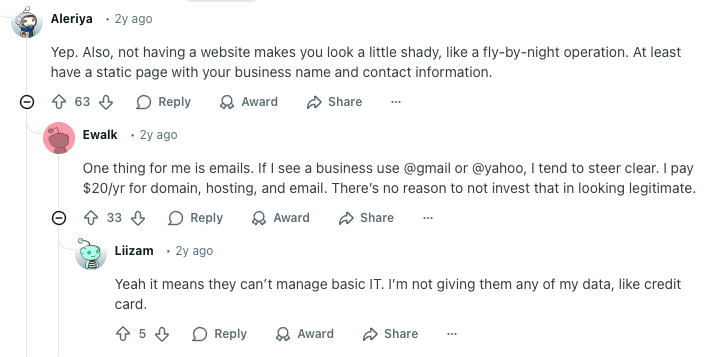
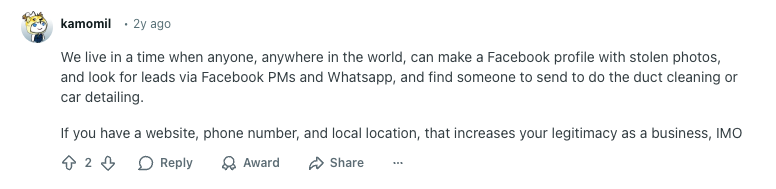
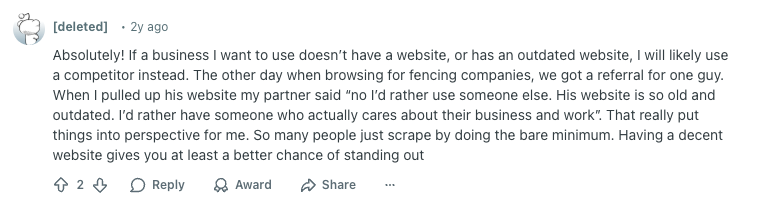
In a World of Shady Characters, a Website Indicates You’re Legit
A lot of people—especially Millennials and older—are skeptical of brands with no website, or with an outdated website.
A clean, professional site indicates that you run a real business, not some kind of side hobby. It shows that the company cares about the details and it builds trust immediately, before the user reads a single word of copy.
Scammers don’t want to be pinned down, so they often don’t go to the trouble to create a static site. That’s not to say that there aren’t scam sites out there—there certainly are. But a small business website is an early trust indicator.
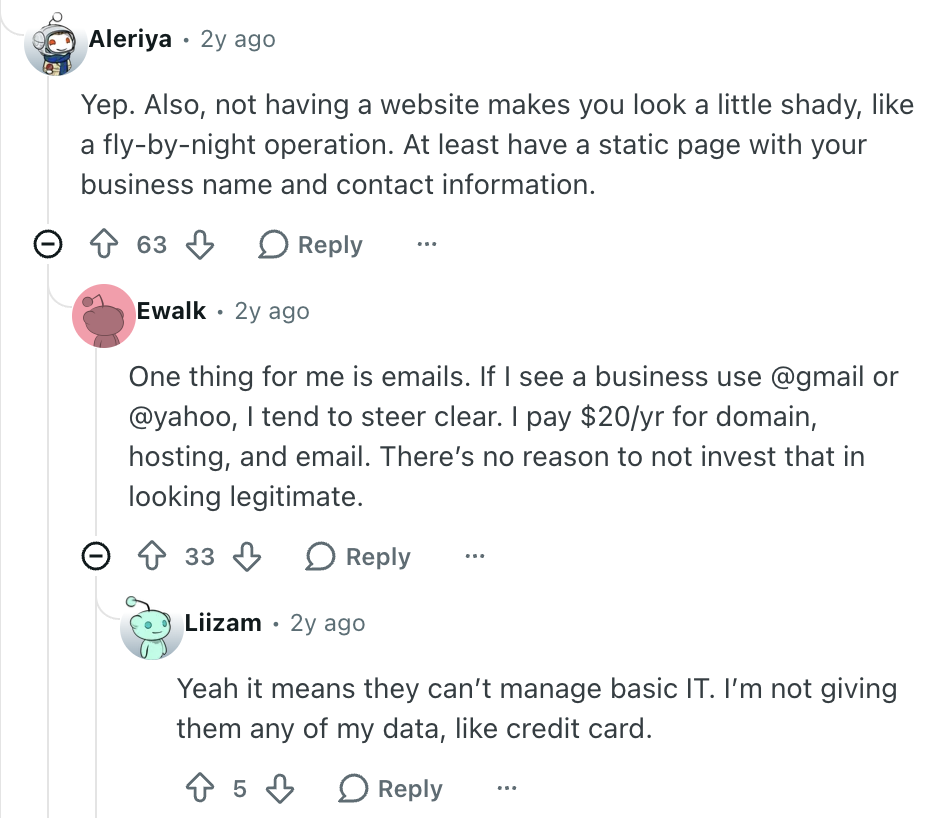
Here’s what some Redditors had to say:
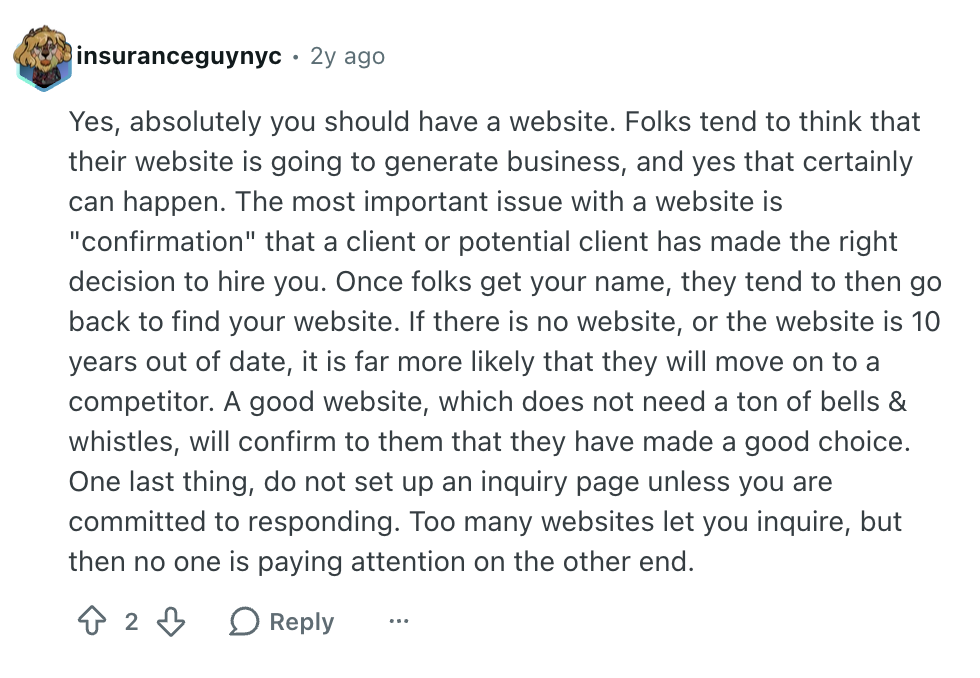
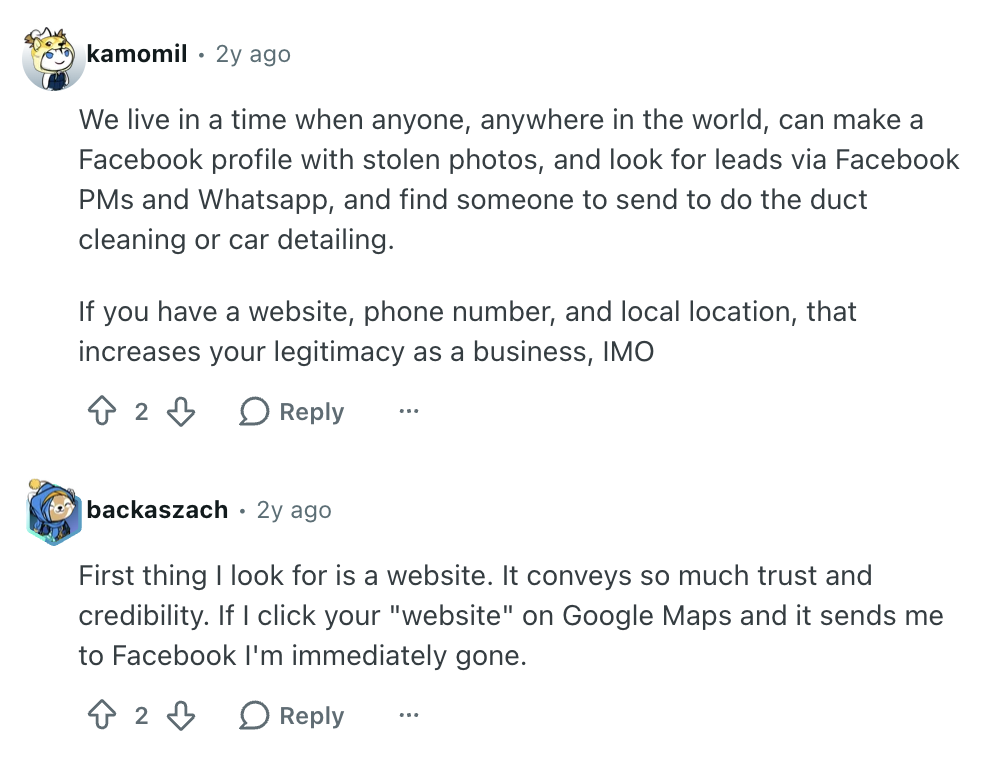
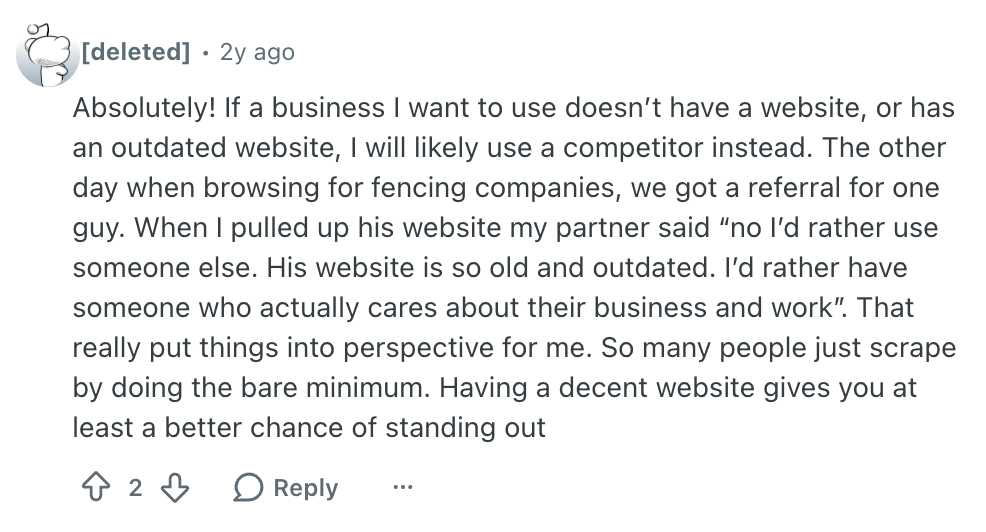
A Small Business Website is Real Estate You Own
As discussed above, you need to own at least SOME of your online presence.
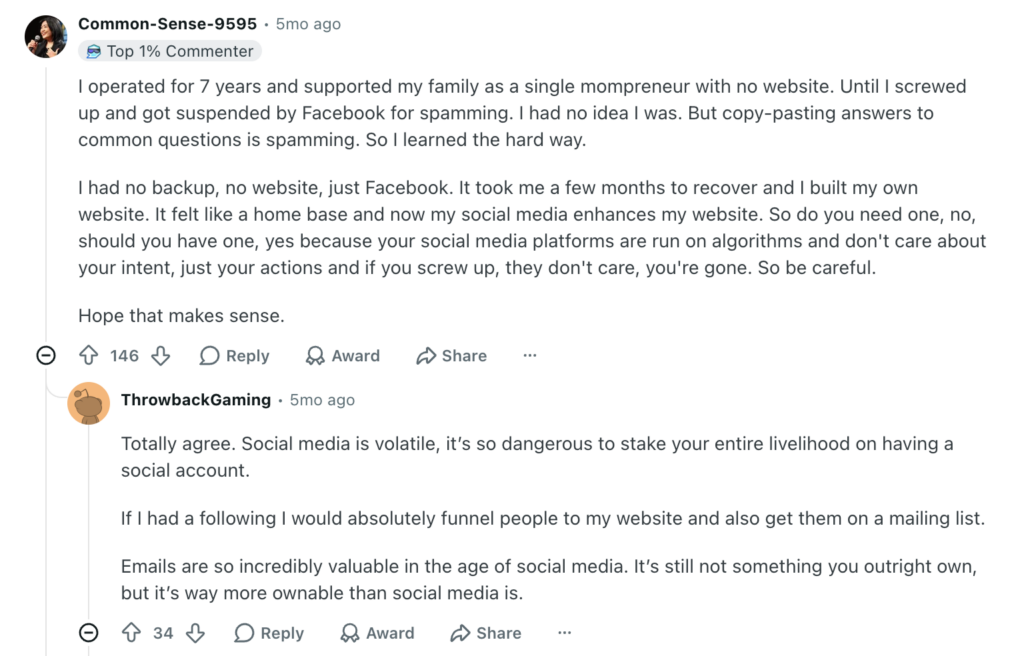
If you build your entire brand on Instagram, TikTok, or Facebook, what happens if those sites go down? Or you get hacked and can’t get your account back? Or get kicked off the platform for whatever reason? Or the site itself disappears? It’s not impossible. Until recently, TikTok’s future in the United States was uncertain.
Or (and I know no one wants to consider this, but it happens) what if your brand is mixed up in a scandal or cancellation situation? It happens, and sometimes through no fault of your own.
Here in Austin, a coffee shop recently got sucked into major online drama when the landlord (not the coffee shop) refused to pay an artist who had painted some murals on the property. People got confused over who exactly was at fault, and the coffee shop got hundreds of hate comments, even though they didn’t commission the artist and didn’t owe her any money.
If every post on Instagram or Facebook is getting bombarded with hate comments, it’s going to hurt your bottom line. Especially if that’s the only place you’re getting customers.
Your small business website is YOUR territory. Your existing customers know where to find you, and new customers will hopefully find you through SEO, not only social media algorithms.
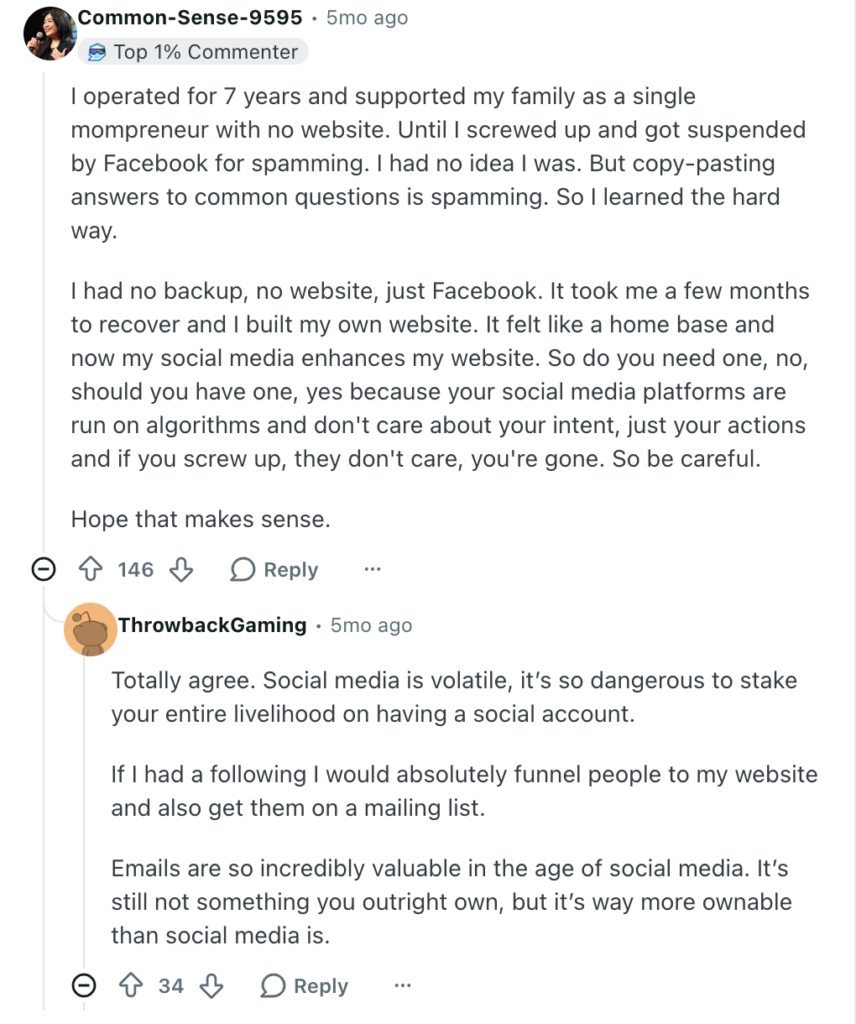
Check out this poor woman’s story:
Some of Your Potential Clients Don’t Use Social Media
Yes, in the year 2026, many people don’t use every social media platform. Some (like me) only have select accounts. I’m not on TikTok, and while I have a Facebook, I never use it anymore.
Other people don’t use any social media at all. And if you don’t have a website, your brand may be functionally invisible to those people.
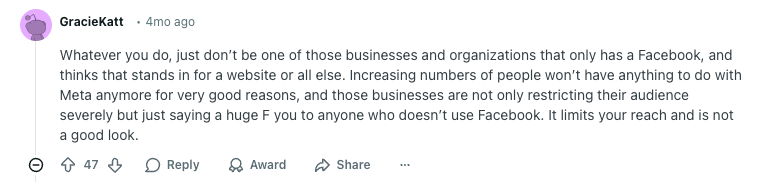
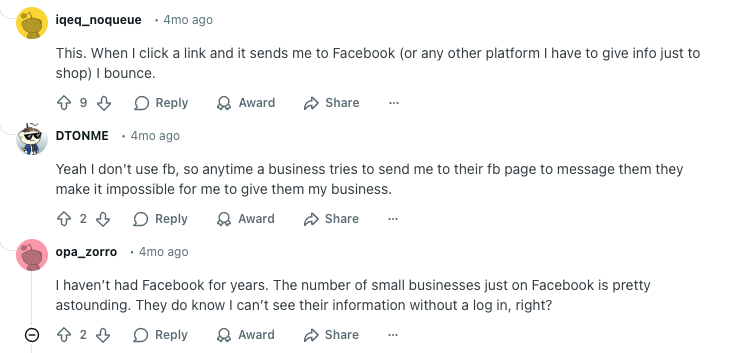
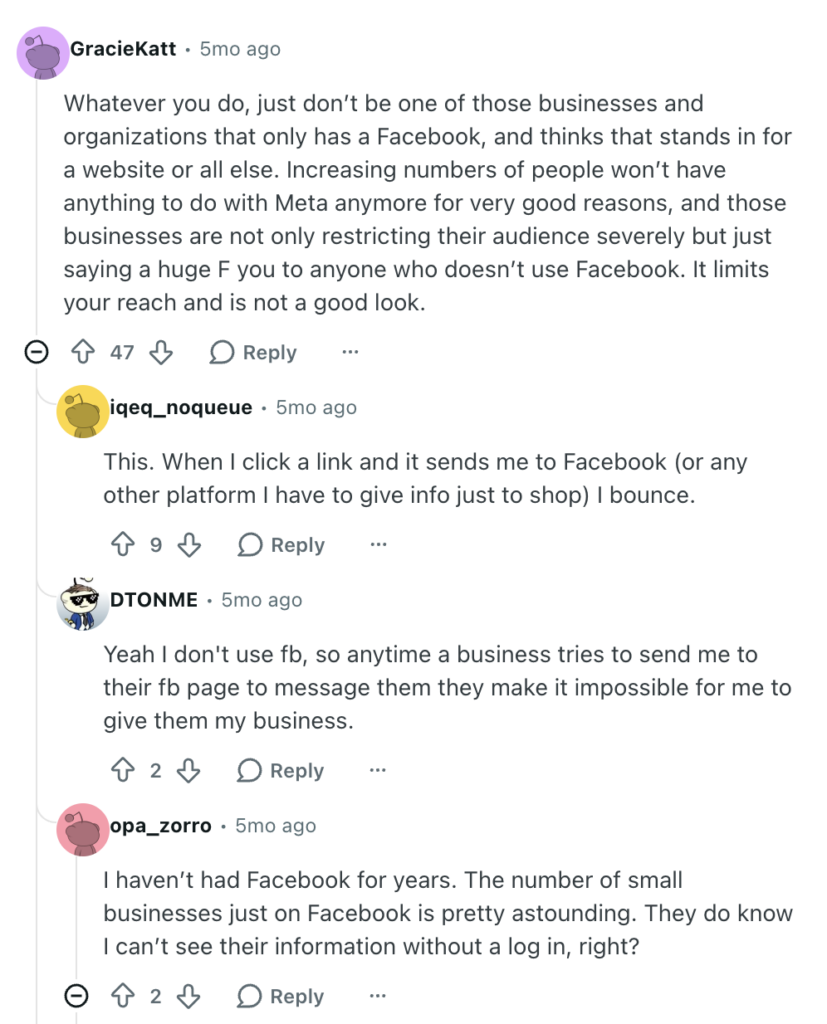
Did you know that your prospects can’t see your Facebook page at all if they’re not logged in?
Why deliberately limit your audience like that?
SEO Loves a Website
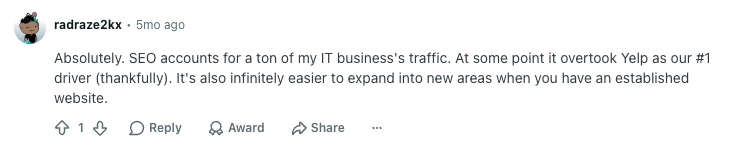
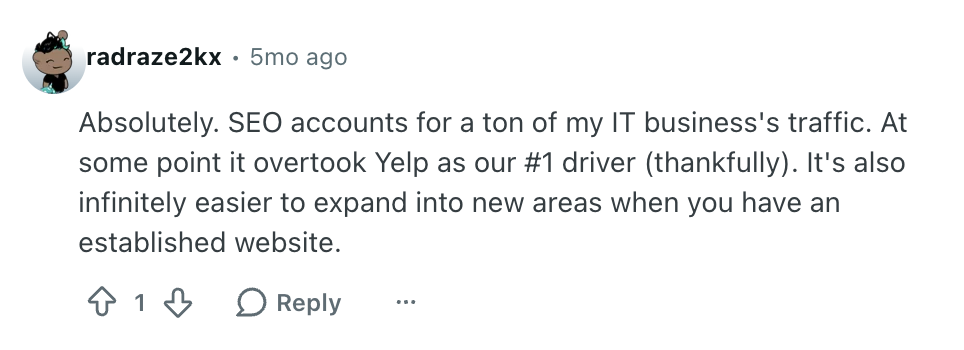
Up until recently, Google didn’t crawl Instagram at all, so your Instagram account was highly unlikely to show up in search.
It does now, but your chances of ranking highly on Google searches is vastly improved with a website vs. social media. Google wants you to have a “home base,” a source of truth that’s the best single result when people look for your brand.
And you want that home base to be the place you have the most control over.
Websites Create a Better User Experience
Algorithms and feeds can be valuable for discovery, but they’re not a reliable way to share information when the user needs it.
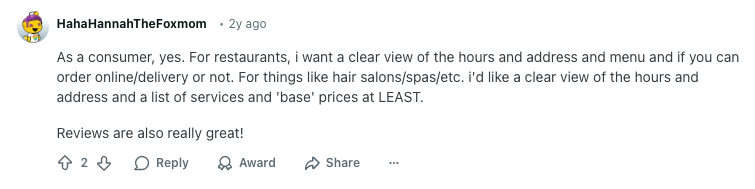
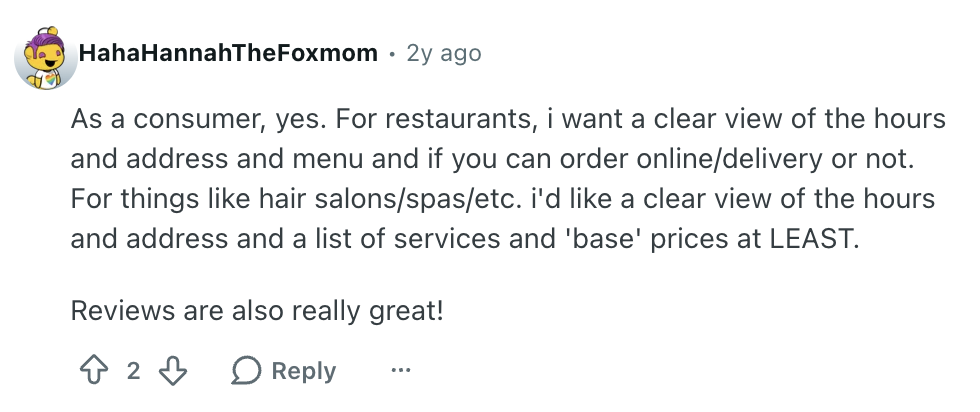
Your prospects or customers don’t want to have to scroll through multiple posts to find your holiday menu, or to figure out if you’re closed.
A website creates a simple, logical hierarchy of information. The hours are on the contact page. The menu is on the menu page. There’s no link in bio, and the link to your online scheduler buried in a Linktree, and blah blah blah…
A website makes it easy.
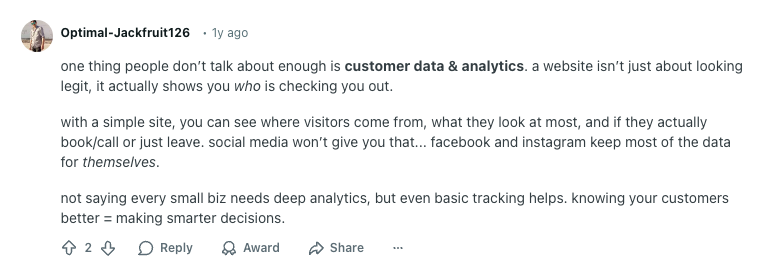
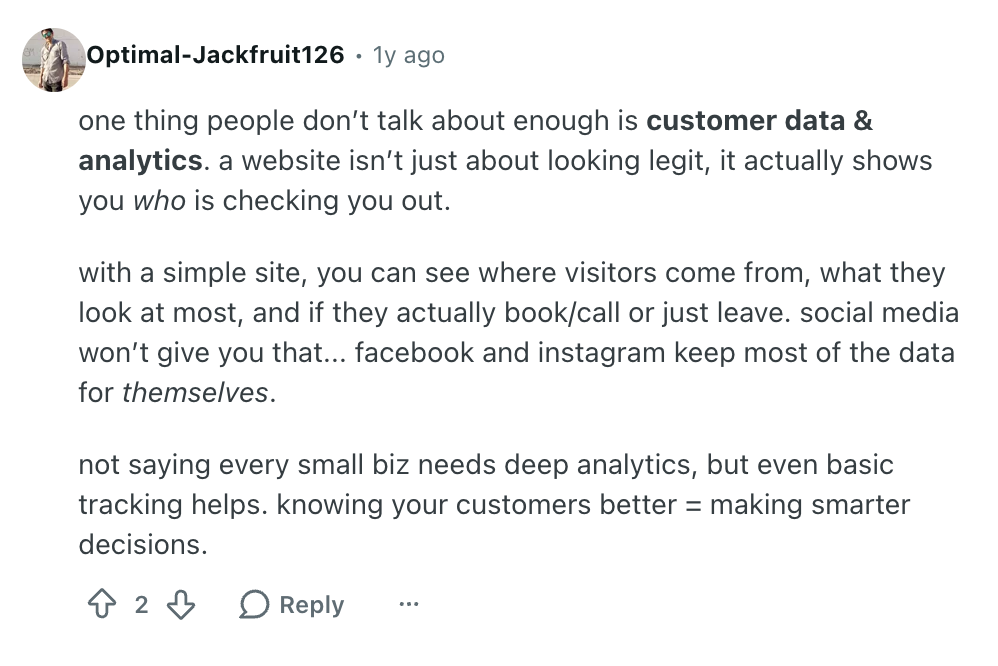
Your Website Lets You Access Customer Data and Analytics
Social media sites are greedy with their data.
You can find some basic information—demographics, how a particular piece of content performed, views over the month.
But the data and analytics available to you on your website are way more valuable. You can see the path people take through your website, how they found you (Google search, social links, direct URL), conversion rates, and tons more.
And the more data you have, the smarter decisions you can make for future marketing efforts.
The Bottom Line
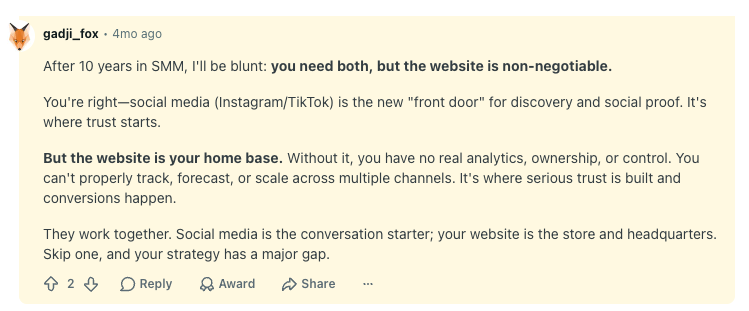
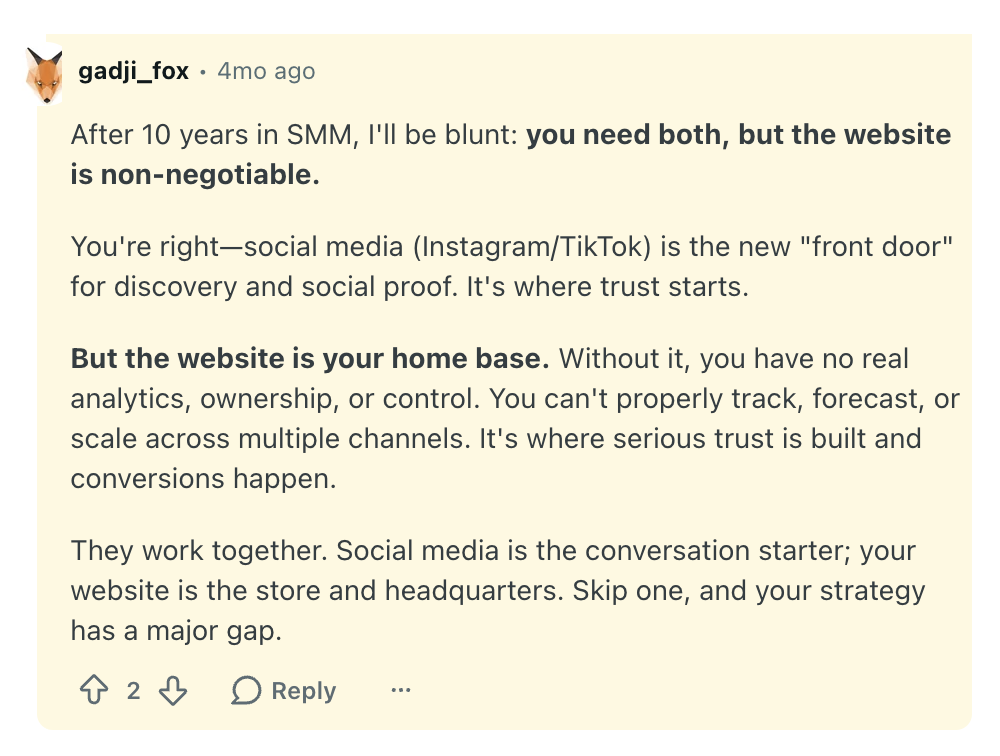
I can’t say it any better than this mic drop moment:
If you’re convinced—but you don’t know where to start—I can help.
A copywriter does much more than just writing the words! I’m a strategic partner that can help you figure out WHAT you need to say, HOW to say it, and WHY it will connect with your audience for a stronger relationship and better sales.





+ show Comments
- Hide Comments
add a comment